A guide for your stay
Surfing in Canggu: Breaks, Seasons and Where to Stay

Surfing in Canggu is the reason many people come to this corner of Bali in the first place. A few kilometres of dark-sand coast hold a soft, rolling wave for a first lesson, faster reef breaks for experienced surfers, and most things in between. Kalapa is set back from the beach, in a garden on the quiet eastern side of Canggu, and the nearest breaks are about 4 km away by road. This guide explains which break suits which surfer, when the waves are at their best, and how a day in the water fits around a slower stay.
Why surfers choose Canggu
Canggu faces south-west into the Indian Ocean and picks up swell for most of the year. Its breaks sit side by side along one stretch of coast, so a mixed group can split up in the morning and meet again for breakfast. One person takes a lesson at Batu Bolong while another paddles out at Echo Beach, ten minutes' walk along the sand.
It is also a forgiving place to begin. The two beginner waves break slowly and far from shore, the water is warm, and board rental and instructors are set up on the beach itself.
Canggu's surf breaks, from mellow to demanding
The table lists the main breaks in the order most visitors meet them. Distances are by road from Kalapa to the beach access.
| Number | Break | Good to know | By road |
|---|---|---|---|
| 1 | Batu Bolong | Beginners and longboards · a slow, rolling wave with lefts and rights · very busy | 4.0 kmDirections |
| 2 | Old Man's | Beginners and longboards · beside Batu Bolong, with board rental at the beach car park | 4.0 kmDirections |
| 3 | Echo Beach | Intermediate to advanced · a fast left over shallow reef · crowded and competitive | 4.2 kmDirections |
| 4 | Pererenan | Confident intermediates and above · lefts and rights over rock and reef · usually quieter | 4.7 kmDirections |
| 5 | Berawa | Intermediate · shifting peaks over sand, with a shallow reef section for advanced surfers | 5.4 kmDirections |
Distances are measured by road from Kalapa using OpenStreetMap routing. Break descriptions summarise published surf guides checked on 25 November 2026. Conditions change with every swell, tide and sandbank, so ask an instructor or a local surfer before you paddle out somewhere new.
Batu Bolong and Old Man's: where most people start
These two neighbouring waves are the centre of Canggu's longboard scene. They break gently and peel for a long way, which gives a beginner time to get to their feet. That is also why they are crowded. Expect lessons, rental boards and longboards all sharing the same water, and keep a wide space around you.
Echo Beach, the Sandbar and the River Mouth
A short walk west, the waves change character. Echo Beach is a fast left over shallow, uneven reef with a tight take-off zone. Between Echo Beach and Batu Bolong, the Sandbar throws a hollow, heavy wave over shallow sand, and the River Mouth is a right with strong currents. All three are for experienced surfers. They are good places to watch from the beach with a coconut.
Pererenan
Pererenan breaks left and right over rock and reef near the river. It is usually less crowded than Echo Beach, and guides place it at a solid intermediate level or above. Some recommend reef shoes, because the reef is exposed at low tide and sea urchins live on it.
Berawa
South of Batu Bolong, Berawa has shifting peaks over sand that suit intermediate surfers, plus a shallow reef section that works on bigger swells and is for advanced surfers only.
When to surf in Canggu
The season
Bali's dry season runs from about April to October. This is when the Indian Ocean sends the largest and most regular swell, with the biggest waves usually in July and August. It is also the busiest time in the water.
From November to March the swell is usually smaller and the wind turns onshore more often. Smaller waves can suit beginners well. The trade-off is rain: after a heavy downpour the rivers carry runoff and debris into the sea, and the water near river mouths turns murky. Give it a day to clear, and keep your mouth closed when you fall.
The time of day
Mornings are best all year. The wind is lightest soon after sunrise, and in the dry season the trade winds usually pick up by about ten o'clock and roughen the surface. The surf schools arrive mid-morning, so an early start also means more room. The wind often drops again in the last hour before sunset.
The tide
Tide matters a great deal on Canggu's reefs, and published guides disagree on the best tide for almost every break. Check a tide table and a surf forecast the evening before, and trust the advice of the instructor or rental stand in front of the wave on the day.
Reading the tide times and surf forecast
Two free tables tell you most of what you need to know: a surf forecast and a tide table. Surf-Forecast publishes both for Canggu, and apps such as Surfline and Windy show the same kind of information. All times are local Bali time.
A forecast comes down to four things.
- Metres or feetSwell height
The size of the swell out at sea. For a first lesson, look for about 1 m or less.
- SecondsSwell period
The gap between waves. A longer period means more powerful waves at the same height.
- Direction and speedWind
Light wind from the land, called offshore, keeps waves clean. Wind from the sea makes them choppy.
- Time and heightTide
The table lists every high and low tide. Canggu usually has two of each a day.
Simplified illustrations. A forecast is an estimate, so look at the sea before you paddle out.
Direction matters too. Surf-Forecast gives south-west as the ideal swell direction for Canggu and north-east as the best wind direction, because that wind blows from the land out to sea.
How to read a tide table
Each row gives a time and a height in metres. On 25 November 2026, for example, the Canggu table listed a low tide at 4:11 AM, a high tide at 10:27 AM, a low tide at 3:47 PM and a high tide at 10:03 PM. The water level ran from about 0 m at the morning low to 2.8 m at the evening high, which is enough to cover a reef or leave it exposed.
The next day, each tide came about 40 minutes later. Tides shift like this every day, so the best hour to surf moves through your stay. A time that worked on Monday will not be the same on Friday.
A simple routine
- The evening before: check the swell height and period for the morning, and choose a break that suits your level.
- The tide: note the times of high and low tide around your session, then ask your instructor or the rental stand which tide suits that break.
- On the morning: check the wind. If it is light or blowing from the land, go. If it is already strong from the sea, try again near sunset or the next morning.
- On big days: BMKG, Indonesia's weather agency, publishes high-wave warnings. If one is in force, watch from the beach.
Learning to surf in Canggu
A first lesson usually lasts about two hours, including time on the sand to practise the pop-up before you paddle out. Most beginners learn at Batu Bolong or Old Man's. Choose a private or small-group lesson if you can: you catch more waves, and your instructor can keep you clear of the crowd.
Book a lesson for your first full day, not the afternoon you land. Eat lightly beforehand, drink plenty of water and expect to be pleasantly tired by lunch.
You do not need to bring anything bulky. Boards are rented on the beach, and the water is warm enough for swimwear and a rash vest. Bring your own rash vest or surf shirt, a reef-safe sunscreen and a hat for afterwards.
Stay safe and share the wave
- Surf within your level. Start at the beginner breaks, and watch a new spot for ten minutes before you go in.
- Know what to do in a rip. If a current carries you out, stay with your board, stay calm and paddle across it, parallel to the beach, until you are out of its pull. Raise one arm if you need help.
- Respect the reef. Low tide exposes rock and reef at several breaks. Fall flat, protect your head, and clean any cut properly as soon as you are out.
- Follow the line-up. The surfer closest to the breaking part of the wave has priority. Do not drop in, paddle back out around the break and not through it, and give local surfers their space.
- Protect your skin. The equatorial sun is strong even under cloud. Wear a rash vest and reapply sunscreen between sessions.
Staying at Kalapa between sessions
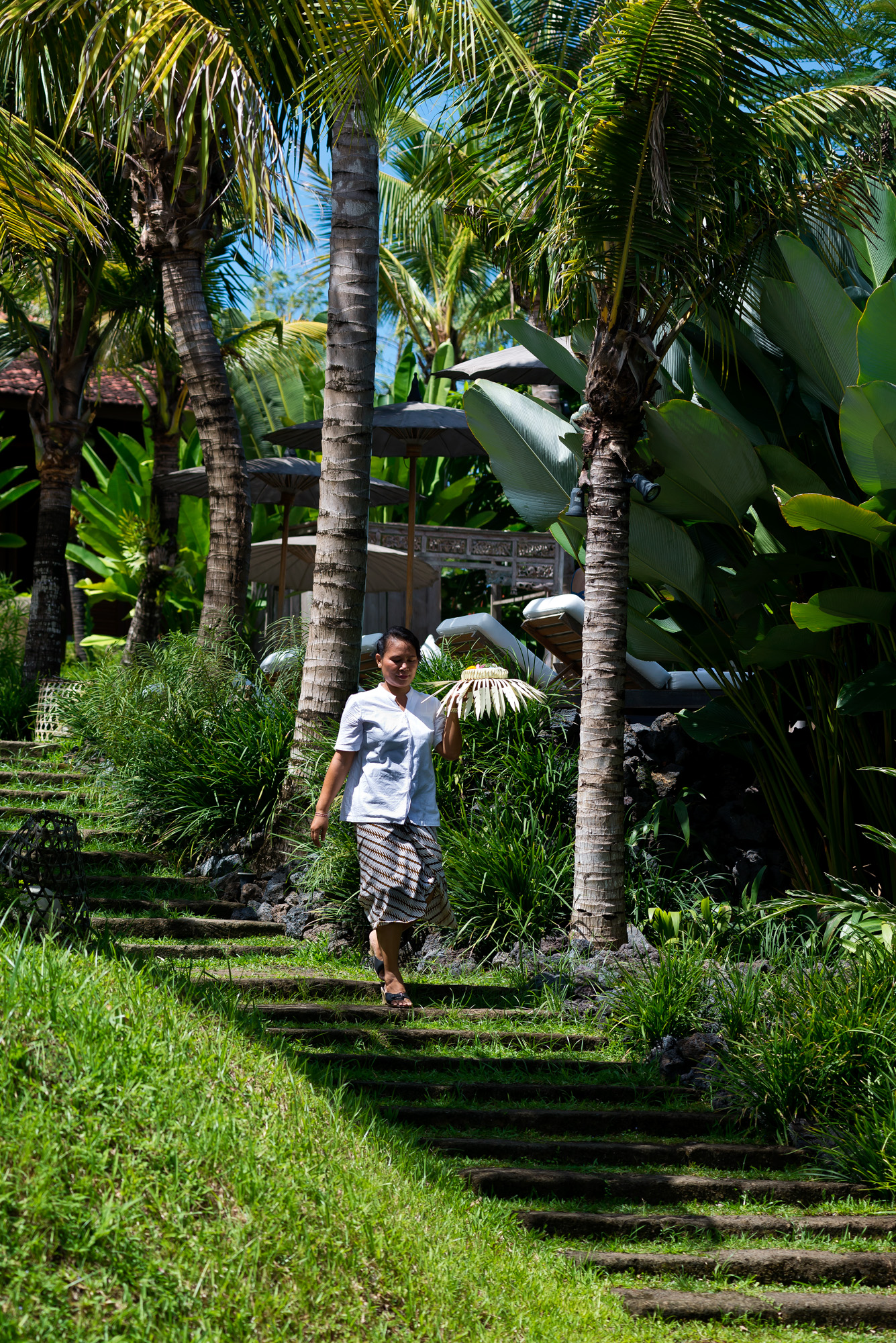
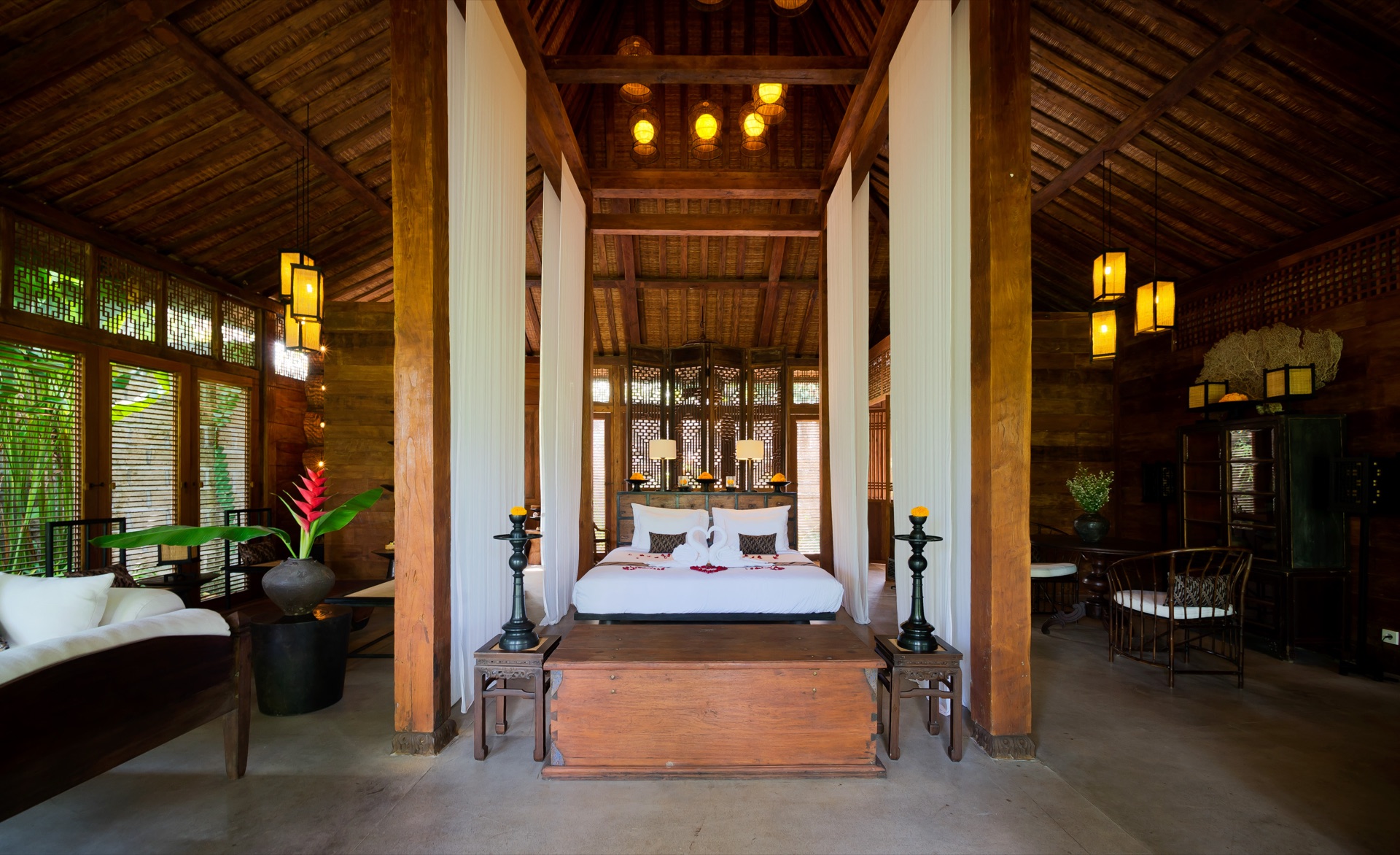
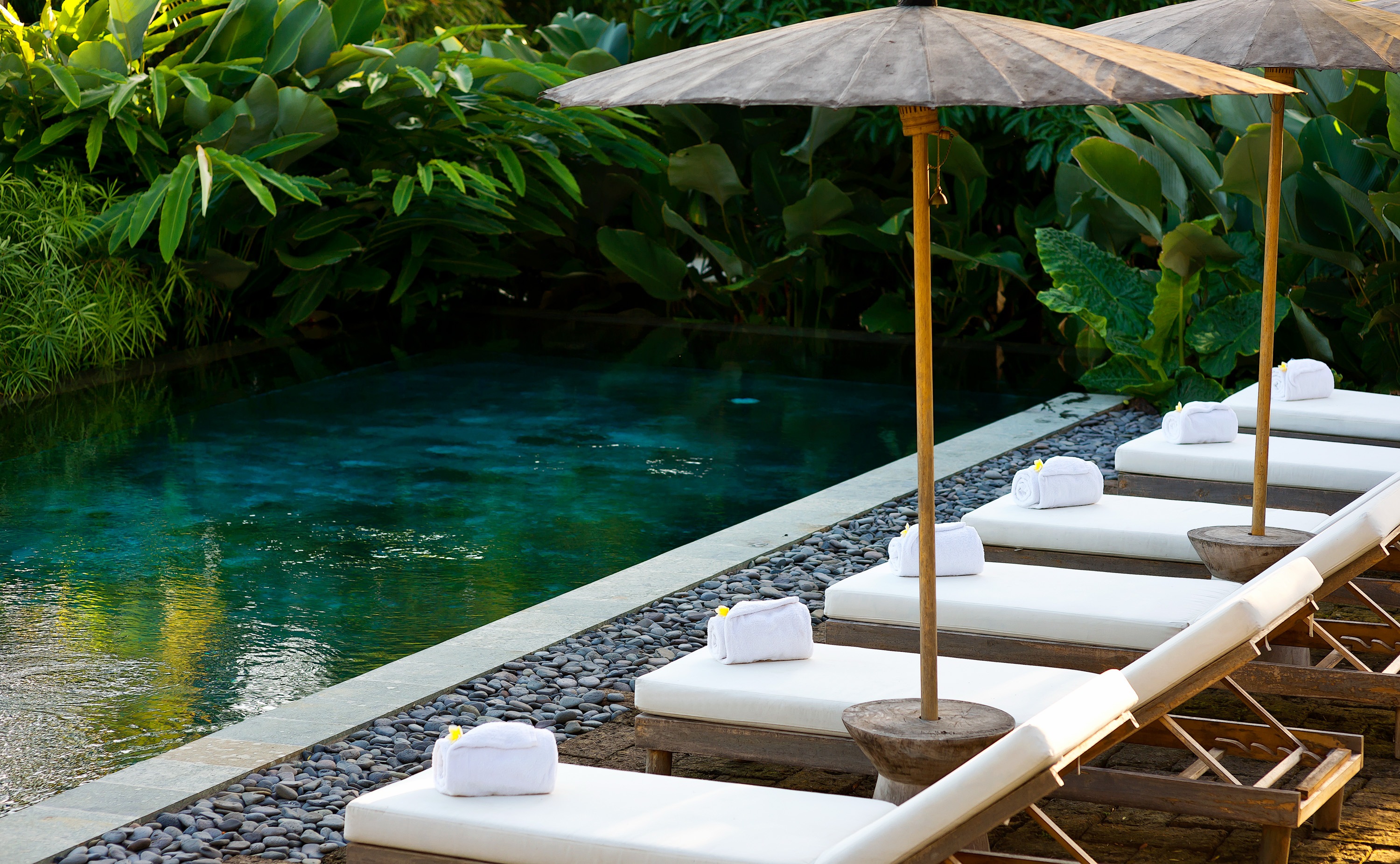
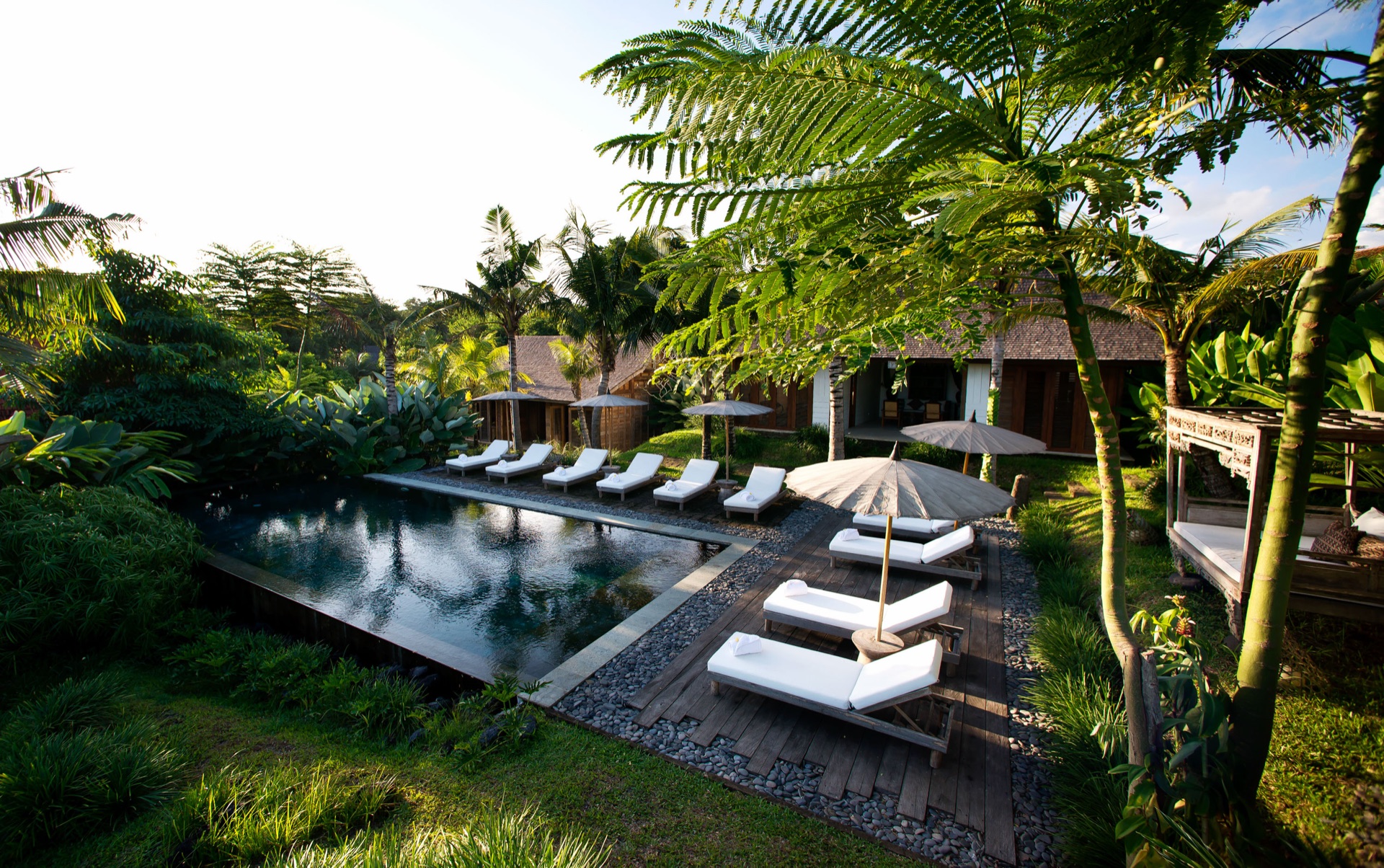
Kalapa is not on the beach, and for many surfers that is the point. After a morning in a busy line-up, you come back to a garden of palms, nine timber houses and a pool where the loudest sound is usually the birds. Batu Bolong is about 4 km away by road, and most guests ride there by scooter or book a ride-hailing car. Traffic near the beaches builds through the day, so leave early and check a live map.
Our Surfing Escape package puts the pieces together. The three-night stay includes one private two-hour surf session with equipment, daily breakfast and afternoon tea, one dinner at Rasa Restaurant, a 60-minute traditional Balinese massage and one complimentary airport or hotel pick-up or drop-off. The five-night stay has three private sessions, two dinners and a 90-minute massage. Our team confirms availability and booking terms.
If you would rather plan your own surfing, stays of four nights or more can use our direct-booking offers, which include daily breakfast and daily fresh coconut water.
Eat and recover
Paddling works the shoulders, back and neck harder than most people expect. Three things help.
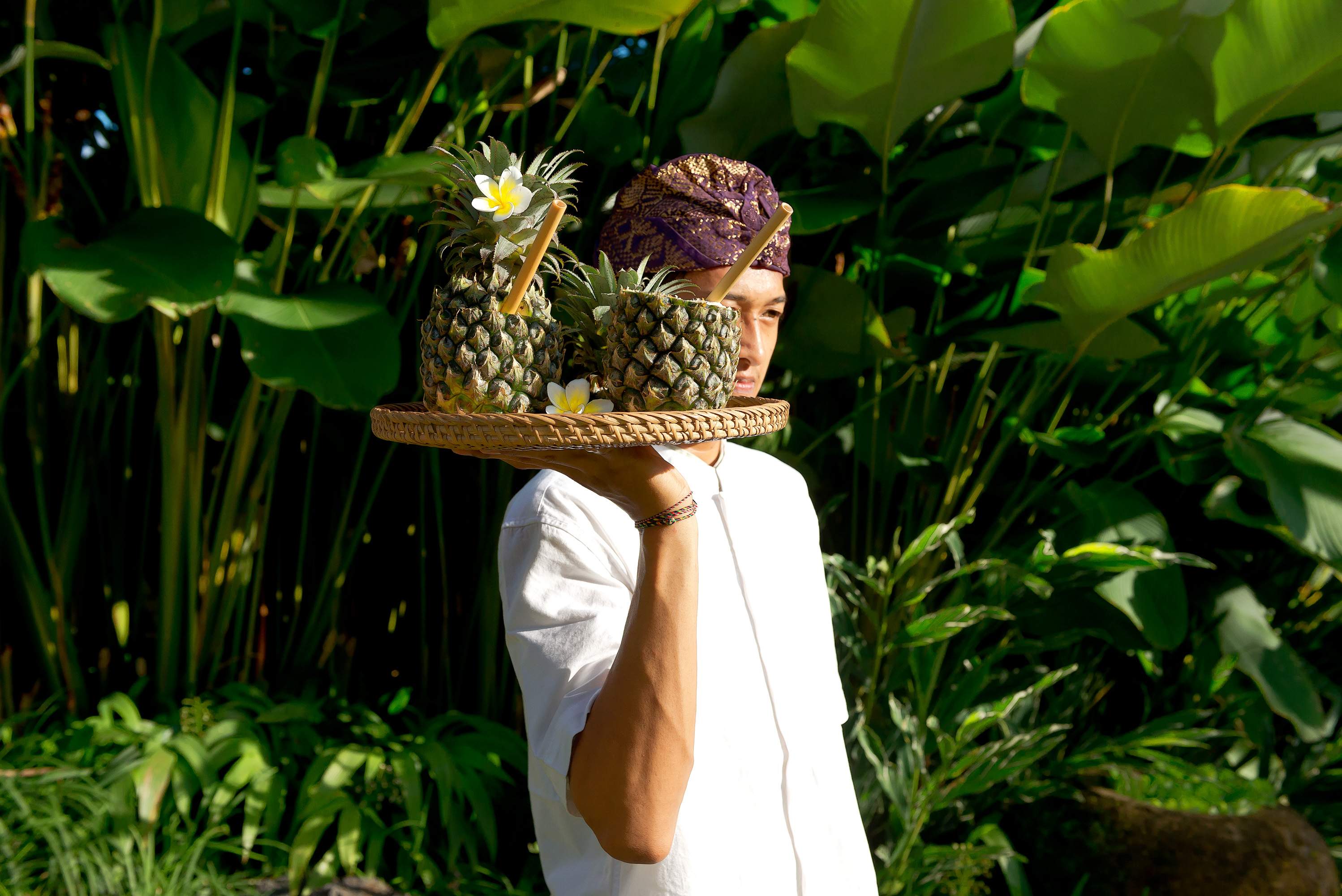
Eat properly afterwards. The Rasa menu has the Kalapa Breakfast with eggs cooked your way, a seared tuna and avocado bowl, the Kalapa Signature Nasi Campur with red rice, chicken, satay, tempeh and egg, and two smoothies made with whey protein. A whole coconut is the simplest way to rehydrate. Tell the team about allergies or dietary requirements before ordering.
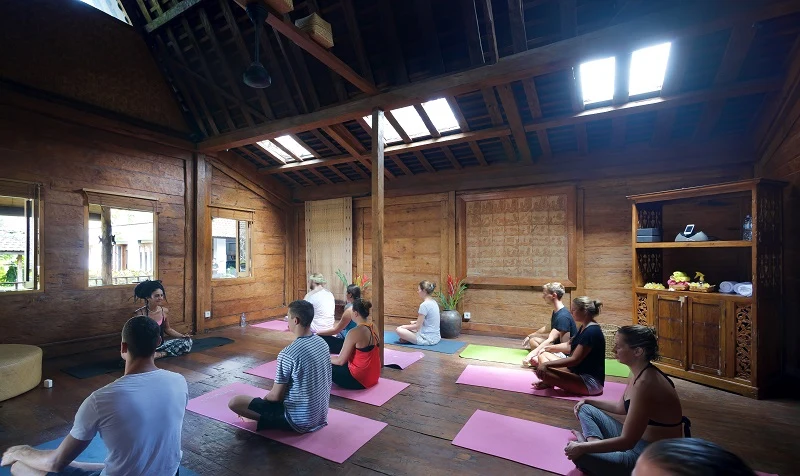
Stretch. Staying guests can join complimentary morning yoga at 10:00 AM, Monday to Saturday, booked after check-in. It falls neatly after a dawn session, and it opens the shoulders and hips that surfing tightens. There is no class on Sundays or when our teacher attends Balinese ceremonies.
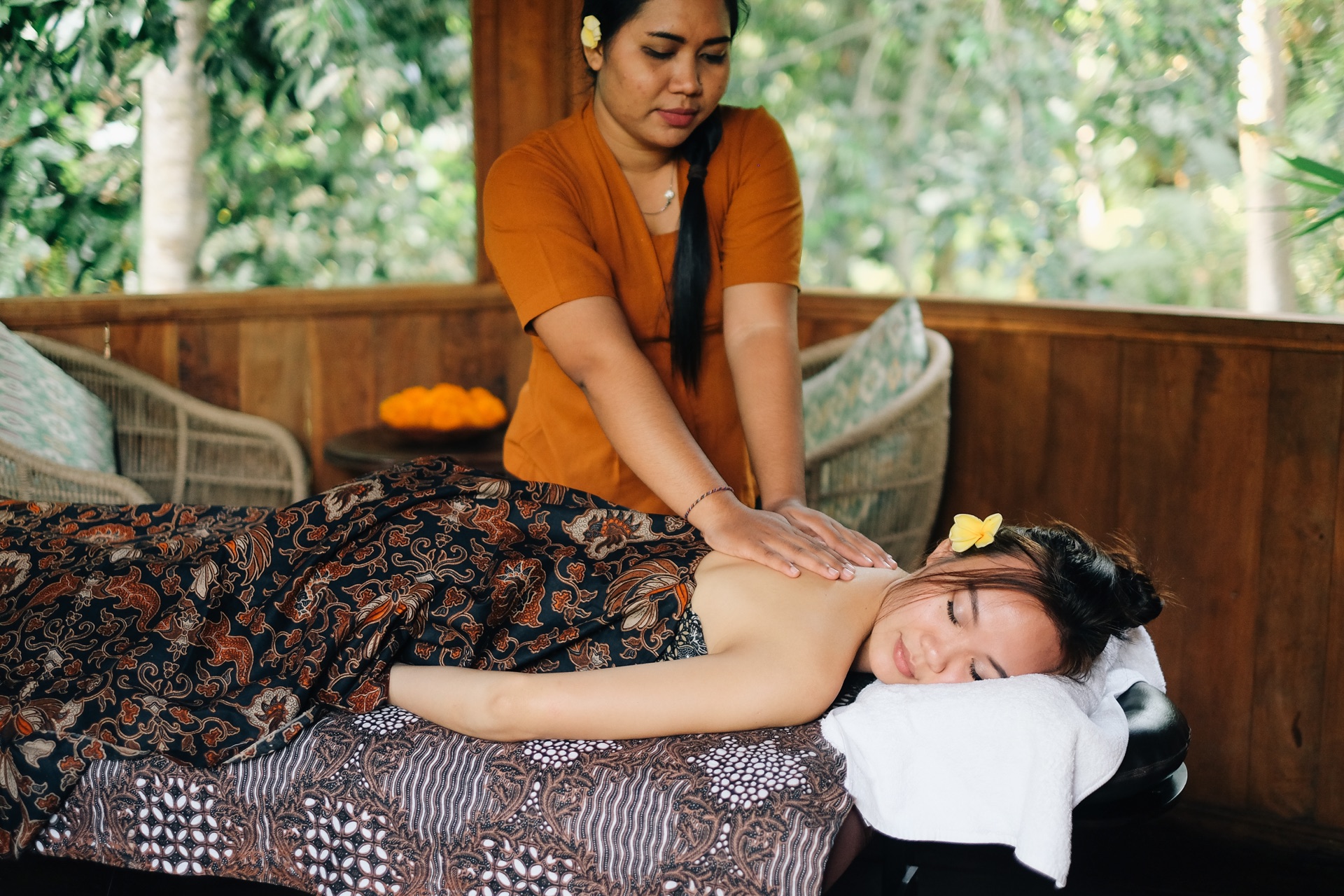
Then rest. The SVA spa menu includes a 90-minute Deep Tissue Massage, with pressure agreed with your therapist, and a Traditional Balinese Massage of 60 or 90 minutes. Spa treatments are an additional booking unless your package or offer includes one.

A surf day at Kalapa
This is a suggestion for a day built around one morning session. Arrange lessons, yoga and spa times with our team.
- First light
A piece of fruit, then the ride to the beach while the wind is still asleep.
- Early morning
Two hours in the water, with a lesson or on your own.
- Back at Kalapa
A whole coconut and a late breakfast at Rasa.
- 10:00 AM
Complimentary yoga in the timber yoga house, Monday to Saturday.
- Afternoon
The pool, a book and a massage at SVA.
- Evening
Sunset on the beach to watch the last waves, then dinner at Rasa.
Before you book
Choose your dates first. Come between April and October for the biggest and most consistent swell, or between November and March for smaller waves and fewer people in the water. Compare the villas and bungalows, then share your plans with the team, including your surfing experience, and they will confirm availability and booking terms.
Is Canggu good for beginner surfers?
Yes. Batu Bolong and Old Man's have slow, rolling waves and instructors on the beach. They are also crowded, so book a lesson and go early.
When is the best time to surf in Canggu?
The dry season, from April to October, has the biggest and most consistent swell. Early morning has the lightest wind and the fewest people at any time of year.
Do I need a wetsuit in Bali?
No. The sea is around 26 to 29°C all year. A rash vest protects you from the sun and from board rash.
How far is Kalapa from the surf?
Batu Bolong and Old Man's are about 4.0 km away by road, Echo Beach about 4.2 km, Pererenan about 4.7 km and Berawa about 5.4 km.
Does Kalapa offer surf lessons?
Our Surfing Escape package includes private two-hour surf sessions with equipment: one session on the three-night stay and three on the five-night stay. For other stays, ask our team about arranging a lesson.
How do I check the tide and surf forecast for Canggu?
Look up Canggu on a surf forecast site such as Surf-Forecast. Read the swell height, swell period and wind for the hours you plan to surf, then check the tide table for the times of high and low tide. Tide times move about 40 minutes later each day.